Discoveries
Ghosts in the Water: Declassifying the Gulf of Tonkin's Fateful Night
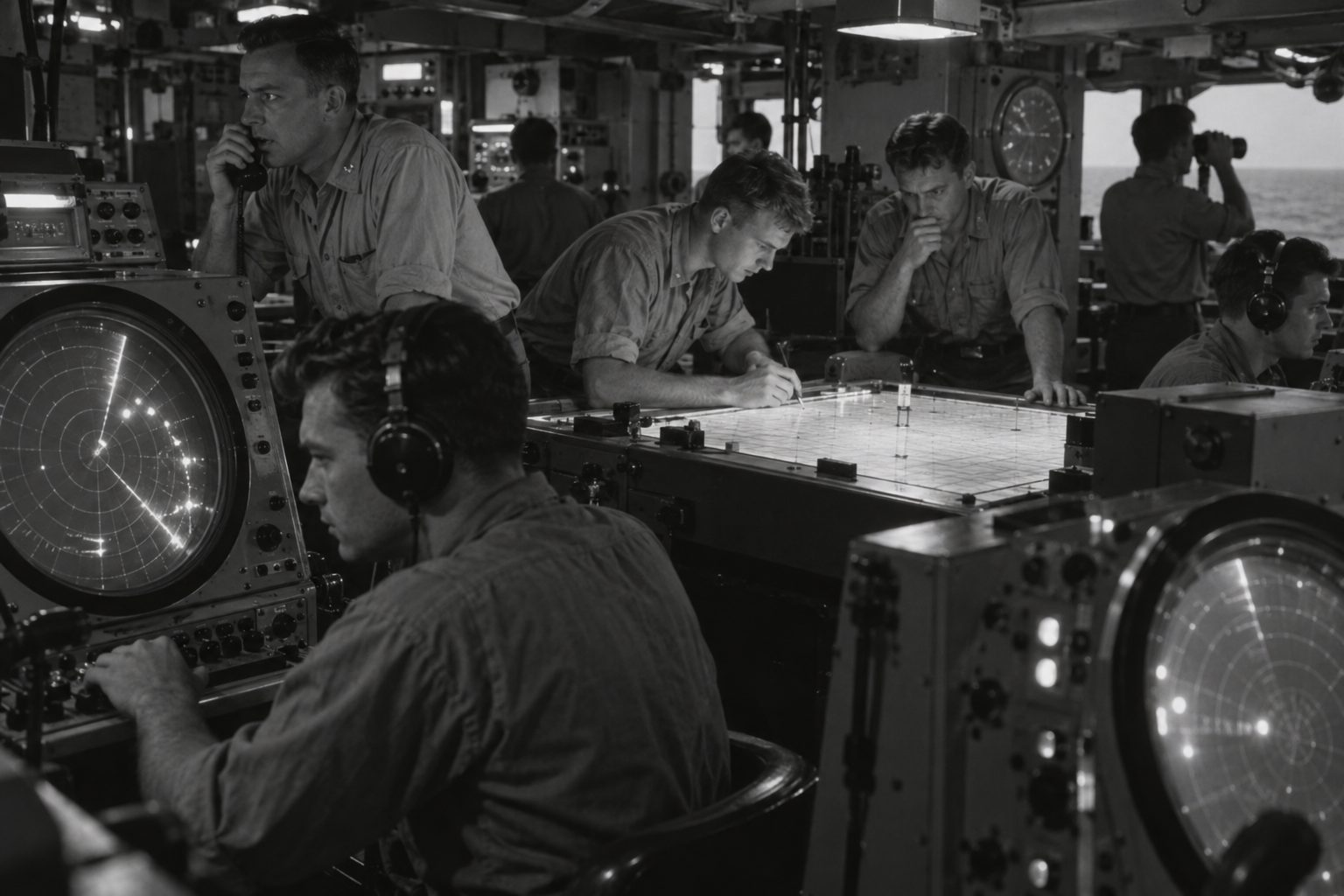
For decades, the second Gulf of Tonkin engagement was dismissed by sceptics as a staged provocation. Declassified records reveal a reality rooted in phantom radar blips and manicured intelligence.
26 October 2026 · InMillhouse
On the night of 4 August 1964, the destroyers USS Maddox and USS Turner Joy reported coming under sustained attack by North Vietnamese torpedo boats in the pitch darkness of the South China Sea. The engagement served as the pivotal catalyst for the Gulf of Tonkin Resolution, effectively handing President Lyndon B. Johnson sweeping authority to deploy American military forces throughout Southeast Asia. In the decades that followed, anti-war critics and conspiracy theorists argued that the entire incident had been a calculated 'false flag' operation, engineered from the highest levels of the White House to manufacture a casus belli [1].
Declassified intelligence released by the National Security Agency (NSA) and the National Archives has since separated conspiratorial myth from bureaucratic reality. The declassified files demonstrate that whilst a genuine naval engagement did occur on 2 August, the infamous second attack on 4 August was entirely non-existent [1],[2]. Ships had not engaged enemy vessels; rather, inexperienced sonar and radar operators had chased ghost returns caused by severe weather anomalies and the turbulence of their own rudders [1].
In his definitive internal study declassified in 2005, NSA historian Robert J. Hanyok revealed that signals intelligence (SIGINT) had not merely suffered from fog-of-war confusion, but had been actively distorted [1]. Mid-level intelligence analysts selectively culled communications intercepts, translating messages that referred to the earlier 2 August engagement and erroneously presenting them to policymakers as evidence of a fresh assault on 4 August [1],[3]. Nearly ninety percent of the relevant intercepted communications were omitted from the final reports presented to senior officials [1].
Crucially, the records demonstrate that the White House did not pre-plan an orchestrated theatrical sham. Rather, key military and civilian leaders succumbed to profound confirmation bias. Task force commander Captain John Herrick sent urgent cables recommending a 'complete evaluation' before taking action, noting that freak weather effects and overzealous sonar operators were almost certainly responsible for the reports [2]. Washington disregarded these cautionary dispatches. Policymakers seized upon flawed and manicured signals to order retaliatory air strikes, consciously suppressing internal doubts to justify a war already politically favoured [2],[3].