Discoveries
The ‘ice wall’: what the edge of Antarctica really is
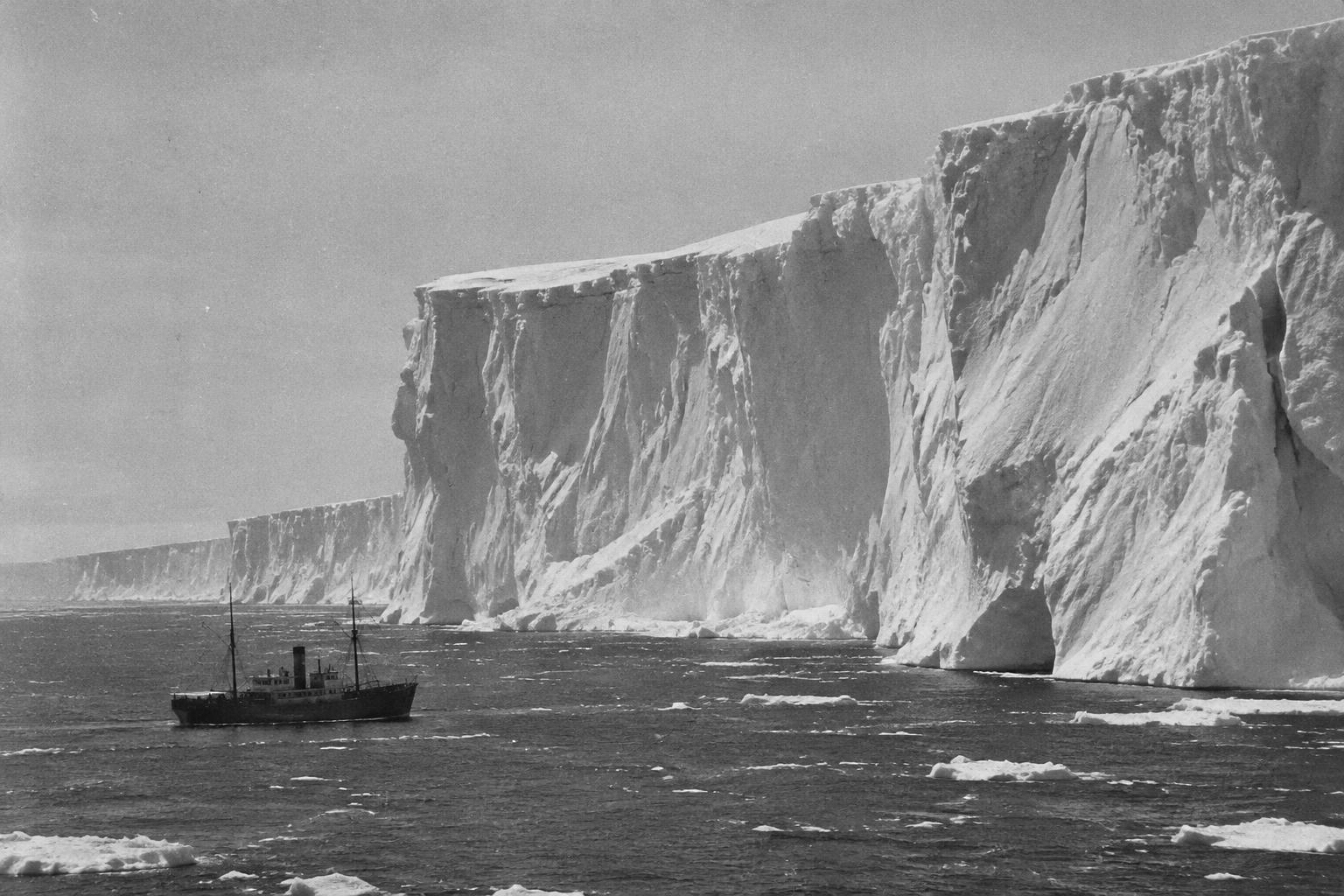
Flat-earth lore claims a guarded wall of ice rings the world. The real ice cliffs are mapped, crossed and studied every year.
29 November 2026 · InMillhouse
A popular flat-earth claim holds that the oceans are held in by a towering wall of ice around the rim of a disc, patrolled to keep explorers out. The image borrows from something real: Antarctica’s ice shelves end in sheer cliffs. The Ross Ice Shelf front, first described by James Clark Ross in 1841, rises up to around 50 metres above the sea and runs for hundreds of kilometres.
But the shelves are not a rim. Antarctica has been crossed overland repeatedly, from the Commonwealth Trans-Antarctic Expedition of 1955–58 to modern solo traverses, and it is circumnavigated by research and tourist vessels. More than 50 countries have signed the Antarctic Treaty of 1959, which opens the continent to scientific stations and inspection rather than closing it.
Satellites now track the ice edge daily, recording calving events such as iceberg A68 breaking from the Larsen C shelf in 2017. Access is regulated for environmental protection and permits, not secrecy. The cliffs are real; the wall around the world is not. [1] [2]
Editorial note: This feature summarises the published sources listed below; it is not a new archive investigation. The accompanying image is AI-generated illustration, not an archival photograph or evidence of the event.