Discoveries
Operation Gladio: The Declassified Truth Behind Europe’s Clandestine Cold War Armies
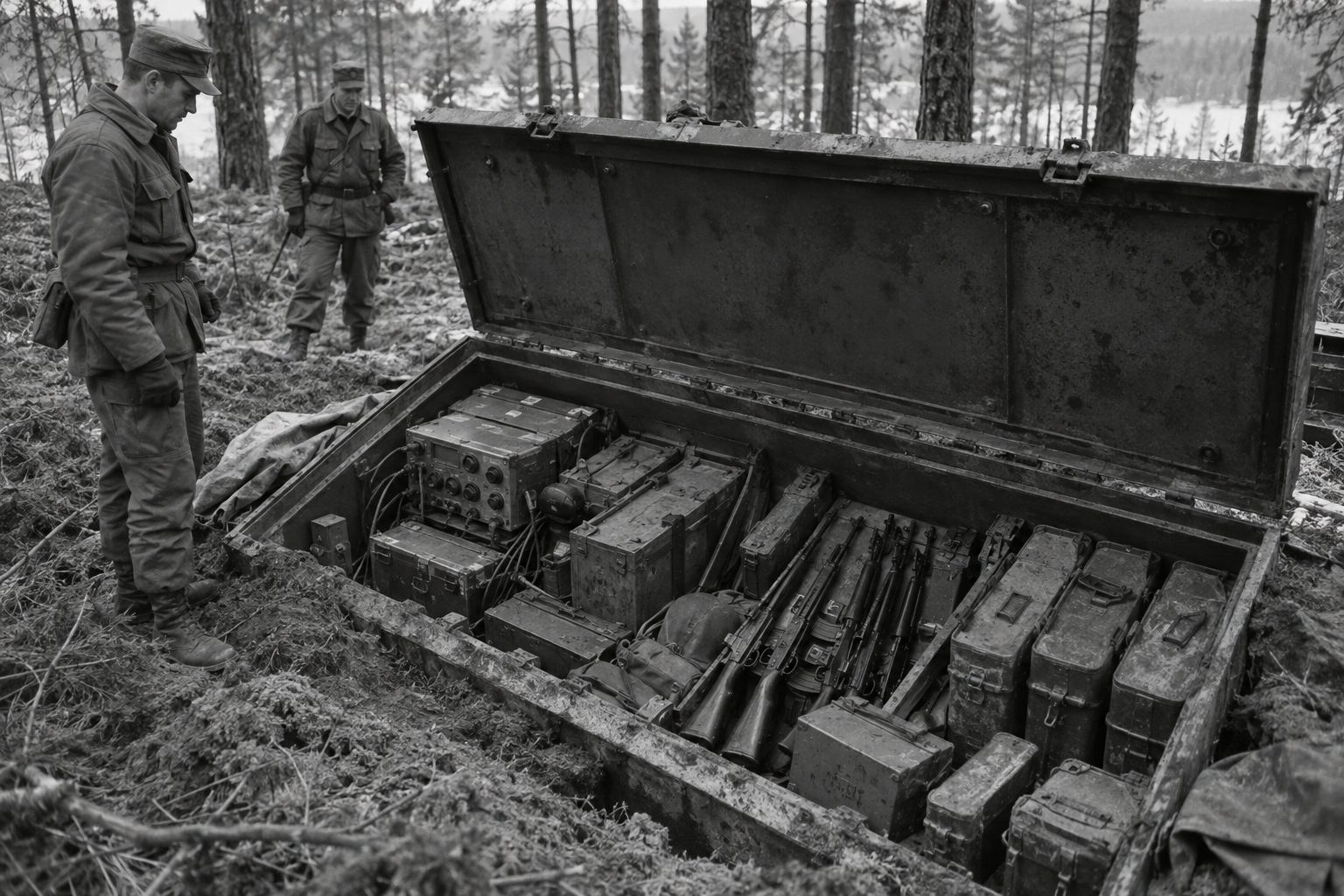
Declassified records confirm that NATO and Western intelligence ran secret stay-behind networks across Western Europe, yet the boundary between defensive contingency and political subversion remains fiercely disputed.
25 October 2026 · InMillhouse
In October 1990, Italian Prime Minister Giulio Andreotti made a remarkable admission before the Chamber of Deputies: throughout the Cold War, Italy had maintained a secret paramilitary apparatus codenamed Gladio [1]. Established in close cooperation with the Central Intelligence Agency and British intelligence, its formal objective was to mount partisan guerrilla warfare, sabotage, and evasion operations in the event of a Warsaw Pact invasion.
Subsequent disclosures confirmed that Gladio was merely one arm of a continent-wide network. Known collectively as 'stay-behind' organisations, parallel clandestine structures were active across Belgium, France, West Germany, Greece, and neutral Switzerland. Declassified CIA files, national parliamentary reports, and NATO records have since confirmed that these networks were co-ordinated by bodies such as the Allied Clandestine Committee (ACC) and the Clandestine Planning Committee (CPC) [1, 2]. Secret underground caches containing automatic firearms, plastic explosives, and radio equipment were systematically buried across rural Europe to equip civilian recruits selected for their staunch anti-communist convictions.
However, the confirmed existence of these networks spawned one of modern Europe’s most pervasive conspiracy theories: the assertion that stay-behind forces were deployed not against potential Soviet occupiers, but against domestic civilian populations. During the tumultuous 'Years of Lead' in Italy, a wave of horrific bombings—such as the 1969 Piazza Fontana blast and the 1980 Bologna railway station massacre—terrorised the nation. Theorists and critics claimed Gladio operated a state-sponsored 'strategy of tension', carrying out false-flag attacks to discredit the political left and justify authoritarian security measures.
Declassified documentation provides a much more nuanced division between fact and allegation. Judicial inquiries in Italy did establish that neo-fascist terrorists had infiltrated or maintained contacts within military intelligence circles, and in certain instances accessed clandestine material. Furthermore, official investigations in Belgium and Switzerland criticised the utter lack of parliamentary oversight governing these clandestine armies [2, 3].
Yet, official inquiries—including the Italian parliamentary commission and United States congressional reviews—produced no documentary evidence that NATO or Western intelligence agencies sanctioned or directed civilian terrorist attacks as institutional policy [1, 3]. The declassified record reveals an extraordinary, high-stakes infrastructure designed for defensive guerrilla resistance, whose secrecy ultimately allowed rogue domestic actors to obscure the line between national defence and political violence.