Discoveries
Rainmakers of the Mekong: Declassified Truths Behind Operation Popeye
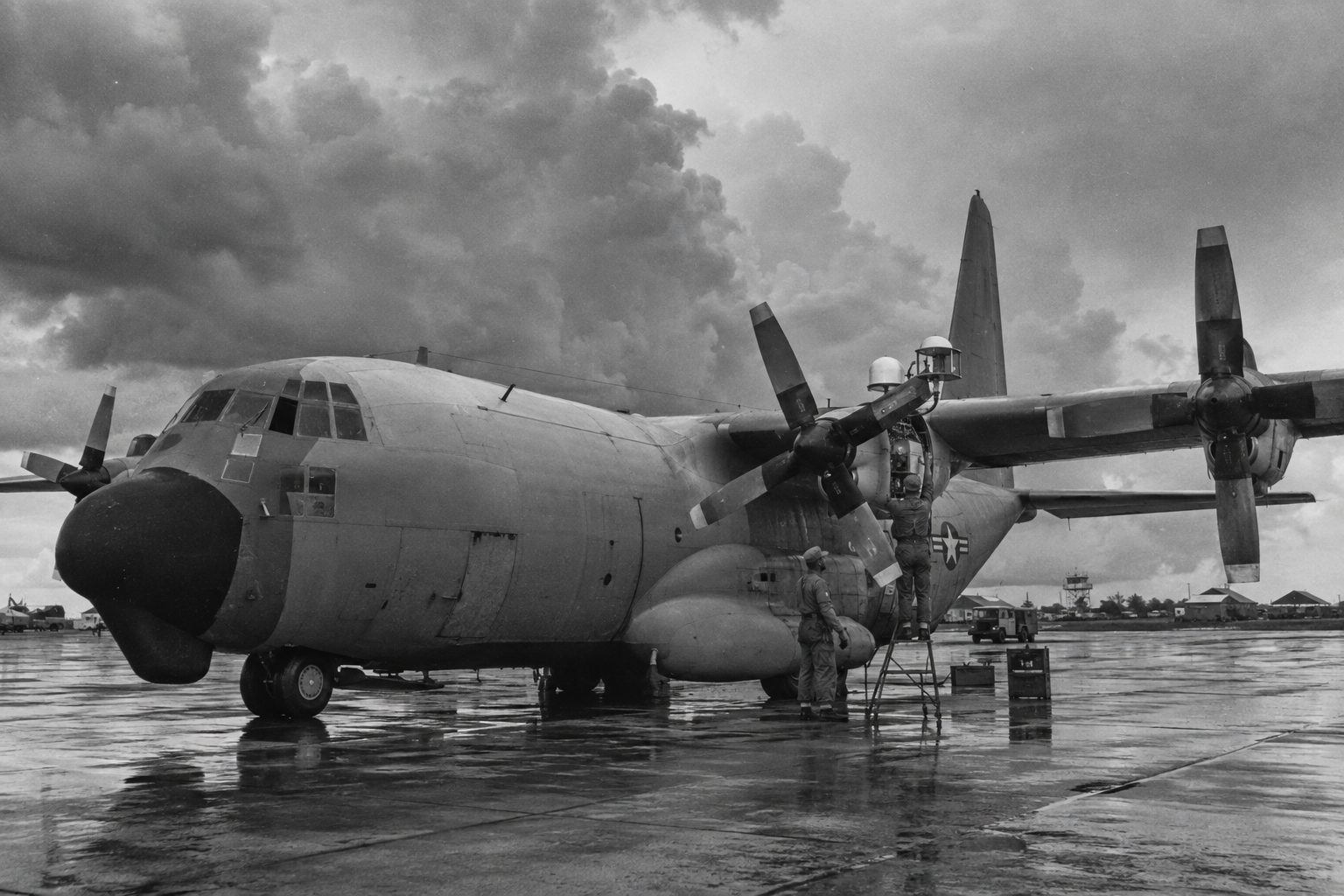
Long treated as the archetype of atmospheric conspiracy, the United States military's weather modification programme over Vietnam was real. Yet declassified records show the reality was far more circumscribed than popular mythology suggests.
26 October 2026 · InMillhouse
In 1971, syndicated columnist Jack Anderson first published leaked accounts of an extraordinary military programme: American armed forces were systematically manipulating the weather across Southeast Asia. For years, sceptics dismissed the idea of operational military rainmaking as science fiction or fringe paranoia. However, when the United States Senate Foreign Relations Committee—chaired by Senator Claiborne Pell—convened top-secret hearings in 1974, the documentary record confirmed that Operation Popeye had indeed taken place between 1967 and 1972 [1].
Conducted primarily by the 54th Weather Reconnaissance Squadron from Udorn Royal Thai Air Force Base, Popeye represented the first documented military employment of operational weather modification [1], [2]. Crews flying modified WC-130 and RF-4C aircraft dispersed silver iodide and lead iodide pyrotechnic flares into convective cloud formations over the Ho Chi Minh Trail. The objective, pursued under the sardonic squadron motto 'Make mud, not war', was purely logistical: to extend the natural monsoon season by thirty to forty-five days, saturate unpaved supply arteries, induce landslides, and wash away river crossings [2].
Popular conspiracy theories frequently extrapolate Popeye into an all-powerful, clandestine weapon capable of conjuring synthetic typhoons and engineering catastrophic inundations at will. The declassified operational evaluations tell a far more technically bounded story. Analysts estimated that cloud seeding induced localised precipitation increases of five to thirty per cent beyond normal tropical patterns [1], [3]. Measuring the programme's actual efficacy proved notoriously contentious even amongst military planners, as separating seed-induced rainfall from baseline equatorial downpours was methodologically fraught [2].
The genuine significance of Operation Popeye lay not in world-dominating atmospheric control, but in the international legal precedent it triggered. Disclosures regarding military weather tampering provoked profound ethical alarm globally, directly inspiring the 1977 United Nations Convention on the Prohibition of Military or Any Other Hostile Use of Environmental Modification Techniques (ENMOD) [3]. While modern conspiracy theorists continually cite the operation as alleged proof of contemporary, covert climate-engineering networks, the historical archive demonstrates a specific, finite, and ultimately abandoned tactical gambit of the Indochina conflict.