Discoveries
Shadows in Mexico City: What Declassified Files Reveal About Oswald and the CIA
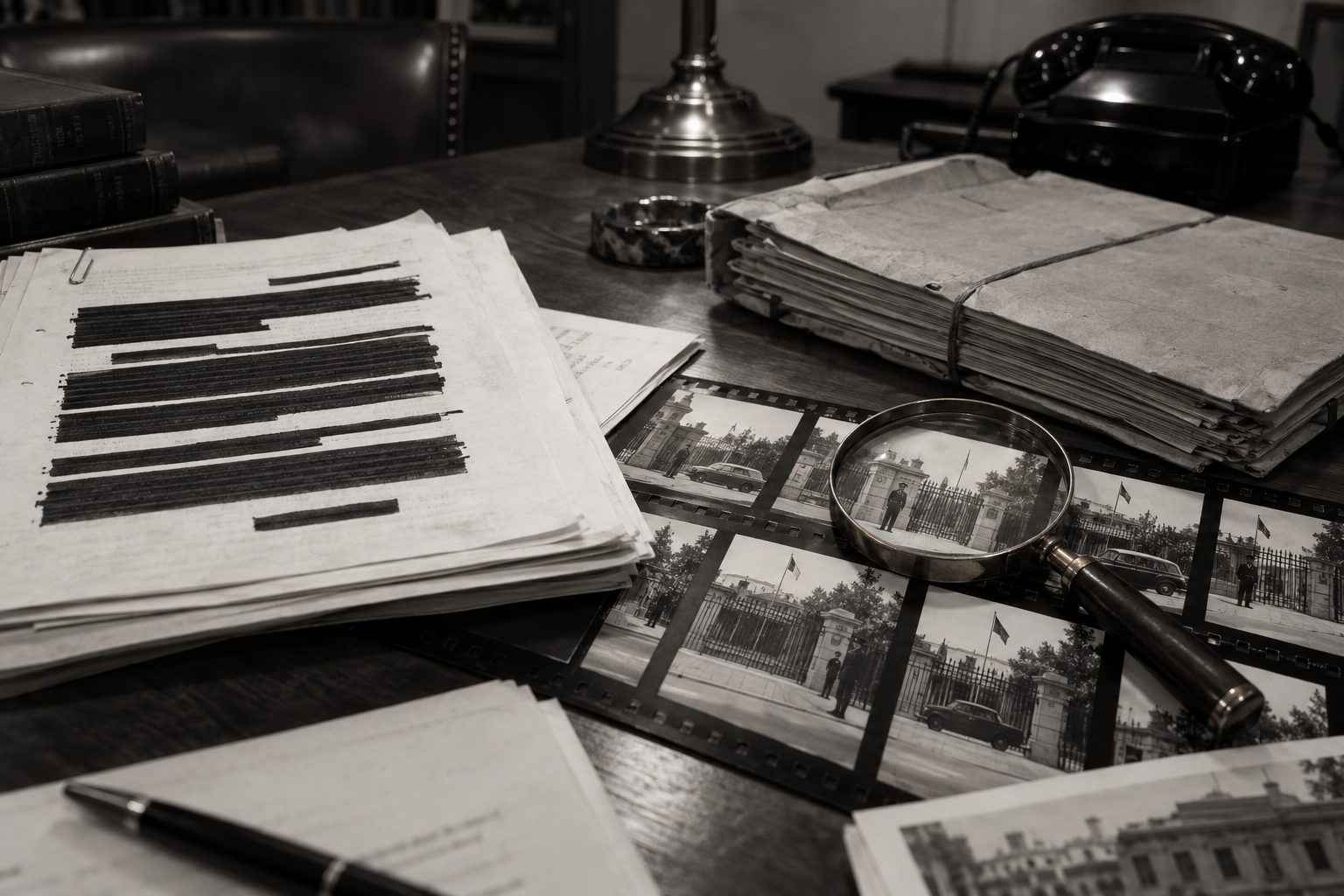
Decades of conspiracy theories surround Lee Harvey Oswald’s clandestine visit to Mexico City weeks before Dallas. Declassified intelligence records reveal bureaucratic surveillance and critical errors rather than covert collusion.
27 October 2026 · InMillhouse
In late September 1963, seven weeks prior to the assassination of President John F. Kennedy, Lee Harvey Oswald boarded an omnibus to Mexico City. Over the course of six days, he visited both the Soviet and Cuban diplomatic compounds. For generations, this interlude has served as the fulcrum for competing conspiracy theories, with theorists alleging that Oswald was either guided by foreign intelligence, coached by rogue Central Intelligence Agency officers, or impersonated by an operative to manufacture a pretext for war [1].
Declassified government files, however, draw a clear boundary between institutional surveillance and conspiratorial design. Through joint operations code-named LIENVOY and LIFEAT, the CIA monitored Soviet and Cuban diplomatic telephone lines and entryways in Mexico City [1]. Intercept transcripts confirm that Oswald contacted the Soviet embassy, speaking broken Russian in an attempt to secure an immediate transit visa to the USSR via Havana. Frustrated by bureaucratic delays, Oswald engaged in an altercation with Cuban consular officials before leaving empty-handed on 2 October [1, 2].
The enduring conspiracy theory regarding Mexico City centres on photographic surveillance and audio recordings. Following the assassination in Dallas, the CIA forwarded a surveillance photograph of an unidentified, heavyset Caucasian man—dubbed the 'Mystery Man'—to the Federal Bureau of Investigation, initially misidentifying him as Oswald. Furthermore, original audio recordings of the intercepted telephone calls were revealed to have been erased. Theorists seized on these discrepancies as proof that an imposter had visited the embassies to incriminate Oswald or that the Agency was suppressing evidence of an operational relationship [2, 3].
Subsequent investigations, notably the Church Committee and the House Select Committee on Assassinations (HSCA), addressed these claims through declassified records, particularly the exhaustive 1978 Lopez Report [2]. The documents confirm that the CIA's photographic tracking of Oswald had failed: the cameras had simply missed his entries. The 'Mystery Man' was an erroneous target whose photograph was mistakenly linked to Oswald due to administrative urgency and compartmentalised intelligence. Similarly, standard station operating procedure dictated the routine reuse and erasure of magnetic audio tape after transcripts were dictated, rather than a targeted destruction of evidence post-Dallas [2, 3].
The documented reality established by the archives is not one of a masterminded assassination plot, but of an intelligence apparatus plagued by communication breakdowns, routine operational blunders, and a desperate postwar effort to cover up domestic surveillance oversights [1, 2].