Discoveries
The lizards whose green blood evolved repeatedly
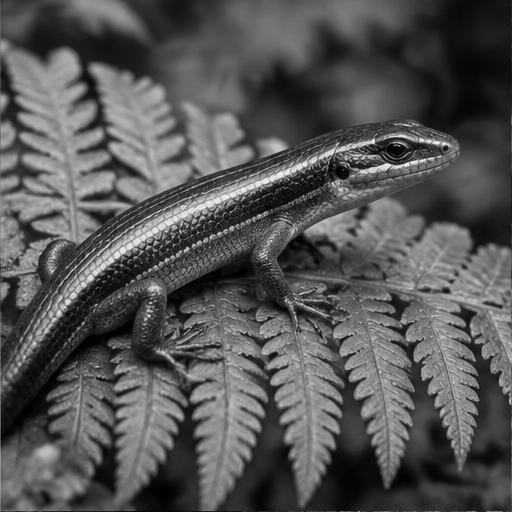
New Guinea skinks tolerate striking concentrations of a pigment produced when red blood cells break down.
30 October 2026 · InMillhouse
Some New Guinea lizards carry a colour scheme that would look alarming in a human hospital. Their blood is green, and the same colour can extend through muscles, bones, tongues and mucosal tissues. The explanation is an unusually high concentration of biliverdin, a green bile pigment produced during the breakdown of red blood cells. It overwhelms the crimson appearance of the cells themselves. [1]
A 2018 study in Science Advances investigated how this unusual trait arose. Researchers compared thousands of genomic regions in green-blooded lizards and their Australasian relatives, building an evolutionary family tree. Their reconstruction supported four independent origins of green blood, rather than a single green-blooded ancestor accounting for every occurrence. [1]
That result makes the mystery more interesting, not more supernatural. These are ordinary terrestrial reptiles with extraordinary physiology. The researchers emphasised that the genetic and biochemical basis of their tolerance, and any role of natural selection in shaping the trait, still required investigation. Green blood is therefore not proof of a known protective superpower. It is a repeat evolutionary outcome whose costs, benefits and underlying mechanisms remain scientific questions. [1]
Editorial note: This feature summarises the published sources listed below; it is not a new archive investigation. The accompanying image is AI-generated illustration, not an archival photograph or evidence of the event.