Discoveries
The London sewer blockage that became a museum object
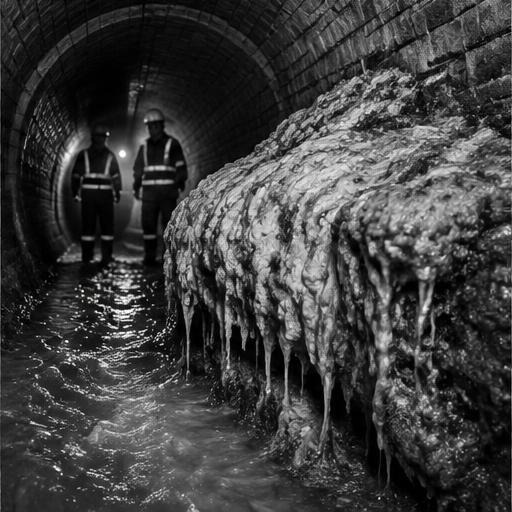
Whitechapel’s enormous fatberg exposed the consequences of sending fats and unsuitable waste down drains.
30 October 2026 · InMillhouse
In September 2017, an inspection beneath Whitechapel revealed a sewer blockage on an extraordinary scale. The mass stretched for more than 250 metres and had an estimated weight of 130 tonnes. It was a fatberg: accumulated fat, oil and discarded material, including wet wipes, rather than a creature growing beneath London. Its discovery threatened flooding and turned an unseen infrastructure problem into international news. [1]
Removing the blockage took nine weeks, according to contemporary BBC reporting. Afterwards, a surviving portion entered the Museum of London, now London Museum. Conservators and industry specialists worked on the material before it went into a sealed display case for a 2018 exhibition. An object normally removed as waste had become evidence worth preserving. [2]
The story needs no sewer monster or paranormal explanation. The ingredients came from human activity, and the consequences fell on the drainage system expected to carry them away. Its size was exceptional, but the lesson was practical: what disappears down a plughole or toilet does not cease to exist. The museum specimen made that hidden connection visible, turning an unpleasant obstruction into a record of modern urban habits. [1][2]
Editorial note: This feature summarises the published sources listed below; it is not a new archive investigation. The accompanying image is AI-generated illustration, not an archival photograph or evidence of the event.