Discoveries
The tiny animals that survived exposure to space
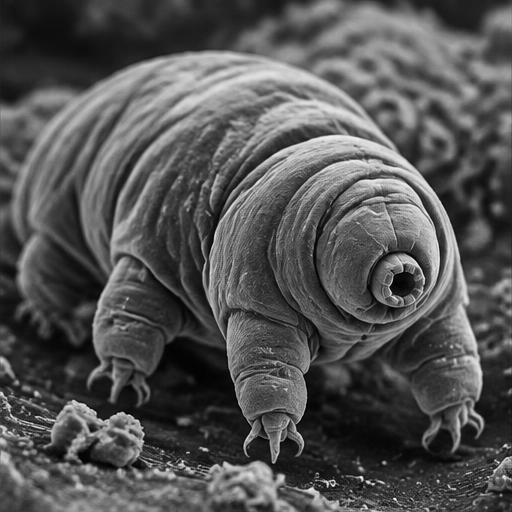
An orbital experiment demonstrated remarkable resilience, not limitless survival or an extraterrestrial origin.
30 October 2026 · InMillhouse
In September 2007, thousands of tardigrades travelled aboard the Foton-M3 mission. These minute animals, also called water bears, were part of an experiment testing whether their celebrated resilience extended to space. The mission spent 12 days in orbit, and the findings were reported in 2008. Some of the animals survived experimental exposure outside the protection normally provided by a spacecraft. [1]
The distinction between conditions matters. The research reported survival after exposure to space vacuum, and recovery of some specimens exposed to both vacuum and solar radiation. It did not show that every tardigrade survives every combination of hazards, or that these animals can live and reproduce indefinitely in empty space. The experiment concerned animals capable of surviving extreme drying, not miniature astronauts moving about normally without air. [2]
The European Space Agency highlighted a central biological question: how do cells protect structures such as membranes and DNA during dehydration? Answering that is more useful than treating water bears as indestructible. Their survival was a measured result under particular experimental conditions. They are terrestrial animals with unusual adaptations, not proof of alien life, paranormal protection or a universal escape from the physical limits that govern living things. [1][2]
Editorial note: This feature summarises the published sources listed below; it is not a new archive investigation. The accompanying image is AI-generated illustration, not an archival photograph or evidence of the event.