Discoveries
Targeting the Dream: What Declassified Records Reveal About the FBI's War on Martin Luther King
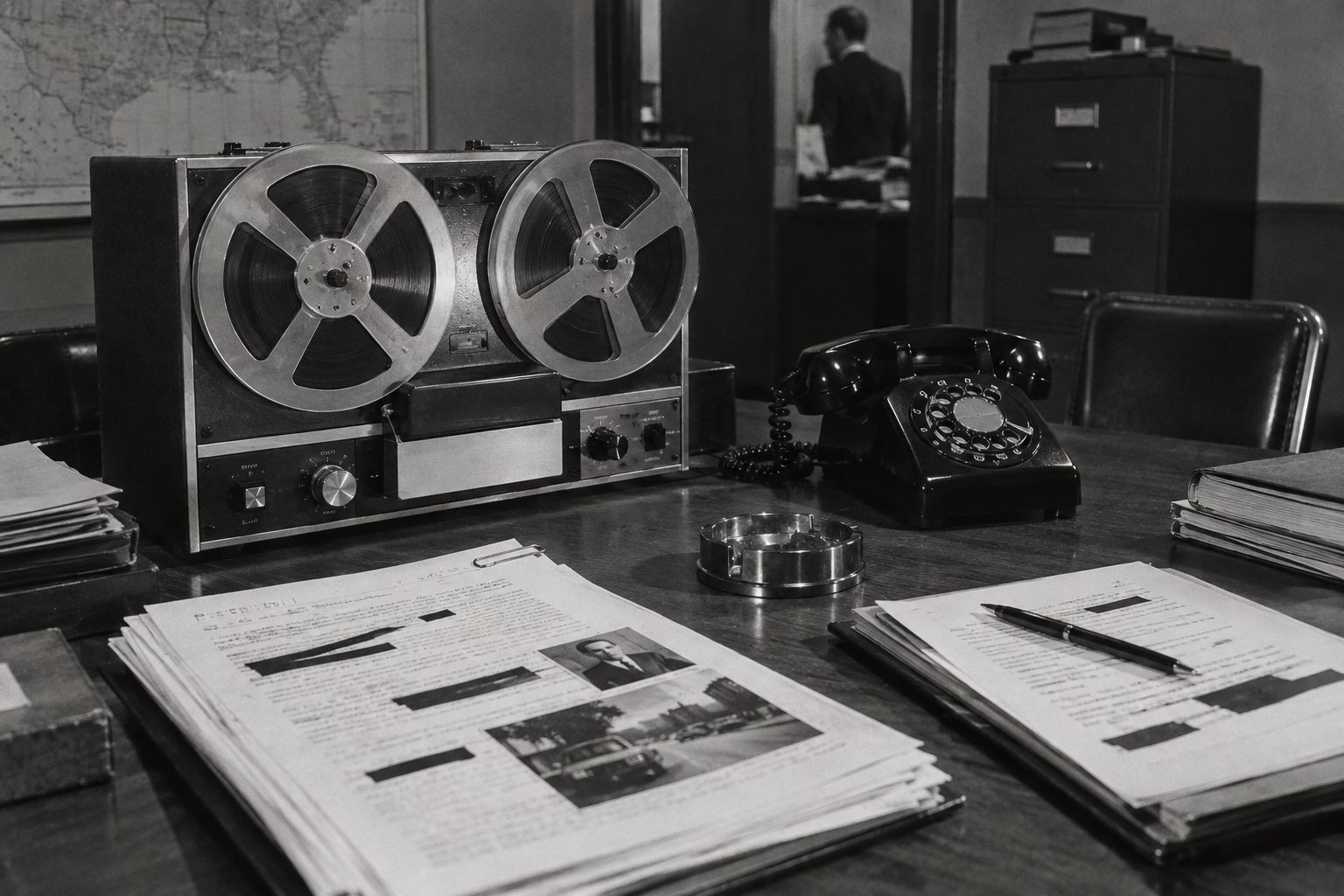
Declassified files and congressional inquiries laid bare the American state's ruthless covert campaign against Dr Martin Luther King Jr. Yet the archival record delineates a firm boundary between demonstrable bureaucratic harassment and unverified assassination plots.
26 October 2026 · InMillhouse
In the decades following the death of Dr Martin Luther King Jr, public debate has frequently conflated verified historical scandal with broader conspiratorial claims. At the heart of this enduring discourse lies COINTELPRO—the Federal Bureau of Investigation’s covert Counterintelligence Programme—which targeted domestic political organisations and dissidents between 1956 and 1971 [1].
What declassified government records confirm is chillingly explicit. Following King’s iconic 'I Have a Dream' speech at the August 1963 March on Washington, the FBI’s Domestic Intelligence Division drafted an internal memorandum designating King the 'most dangerous Negro of the future in this Nation' [1]. In October 1963, Attorney General Robert F. Kennedy authorised wiretaps on King’s home and office telephones under the pretext of probing suspected communist affiliations within the Southern Christian Leadership Conference [2]. The Bureau swiftly exceeded this mandate, placing illicit electronic listening devices in hotel rooms across the United States without judicial warrants [1].
The campaign culminated in late 1964 with what the 1976 Church Committee officially termed an effort to 'neutralise' King as an effective leader [1]. Under the direction of Deputy Director William Sullivan, the Bureau dispatched an anonymous parcel containing excerpts of surveillance audio and an unsigned letter threatening King with public humiliation unless he took his own life before accepting the Nobel Peace Prize [1], [2]. The Church Committee's investigation definitively established that the FBI engaged in systematic character assassination, distributed derogatory dossiers to university chancellors and religious leaders, and actively sought to fracture King’s financial and political backing [1].
However, a clear evidential divide exists between this documented persecution and popular conspiracy theories asserting that federal agencies orchestrated King’s murder on 4 April 1968. Declassified records demonstrate sustained official hostility, leading theorists to conclude that the Bureau directly coordinated the shooting in Memphis or framed James Earl Ray. Yet neither the Church Committee nor the 1979 House Select Committee on Assassinations (HSCA) uncovered documentation supporting federal complicity in the assassination itself [1], [3]. While the HSCA concluded that Ray likely acted as part of a low-level commercial conspiracy involving St Louis associates, it found no evidence implicating the FBI or intelligence community in executing the killing [3].
The documented truth requires no conspiratorial embellishment. Declassified files reveal a sobering reality: federal intelligence mechanisms were weaponised against an unarmed civil rights leader purely to preserve the racial and political status quo [1], [2].