Discoveries
Watergate: the burglary that was caught on the President’s own tapes
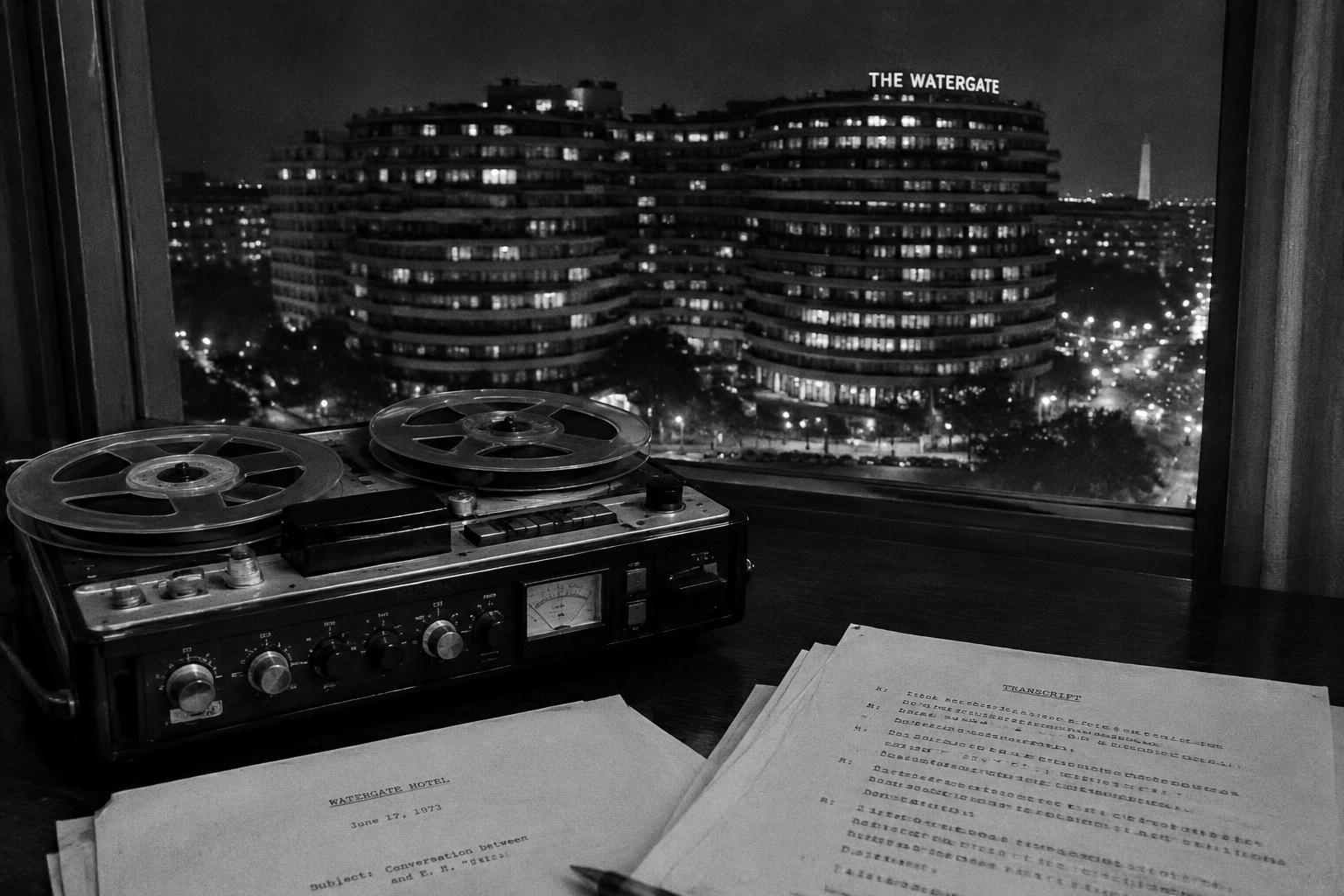
A bungled break-in in 1972 ended a presidency because the evidence had been recorded inside the Oval Office.
29 November 2026 · InMillhouse
In the early hours of 17 June 1972, five men were arrested inside the Democratic National Committee offices at the Watergate complex in Washington. They carried cameras and electronic surveillance equipment, and the trail soon led to the Committee for the Re-election of the President.
What turned a burglary into a constitutional crisis was the White House taping system. In July 1973 a former aide, Alexander Butterfield, told the Senate Watergate Committee that President Nixon recorded his conversations. After a year of legal battles, the Supreme Court ruled unanimously in United States v. Nixon (1974) that the tapes had to be handed over.
The so-called “smoking gun” tape of 23 June 1972 captured Nixon approving a plan to have the CIA ask the FBI to halt its investigation. Within days of its release, he resigned on 9 August 1974. An 18½-minute gap in another tape has never been explained. The lesson the record teaches is plain: the cover-up, documented in the President’s own words, proved more damaging than the crime. [1] [2]
Editorial note: This feature summarises the published sources listed below; it is not a new archive investigation. The accompanying image is AI-generated illustration, not an archival photograph or evidence of the event.